About DOE Button Organization Button News Button Contact Us Button
US Department of Energy Seal and Header Photo
Science and Technology Button Energy Sources Button Energy Efficiency Button The Environment Button Prices and Trends Button National Security Button Safety and Health Button
Office of Environmental Management
  You are here: Skip Navigation LinksEM Home > Packaging and Transportation

Packaging and Transportation

The U.S. Department of Energy’s (DOE) packaging and transportation mission is to (1) develop the systems and technologies to ensure packaging and transportation activities are safe, economical, efficient, secure, and meet applicable regulatory requirements; (2) resolve packaging and transportation issues safely, economically, and promptly; and (3) develop, manage and coordinate policies and procedures for packaging and transportation activities for DOE materials, including hazardous materials (particularly radioactive), substances and wastes.

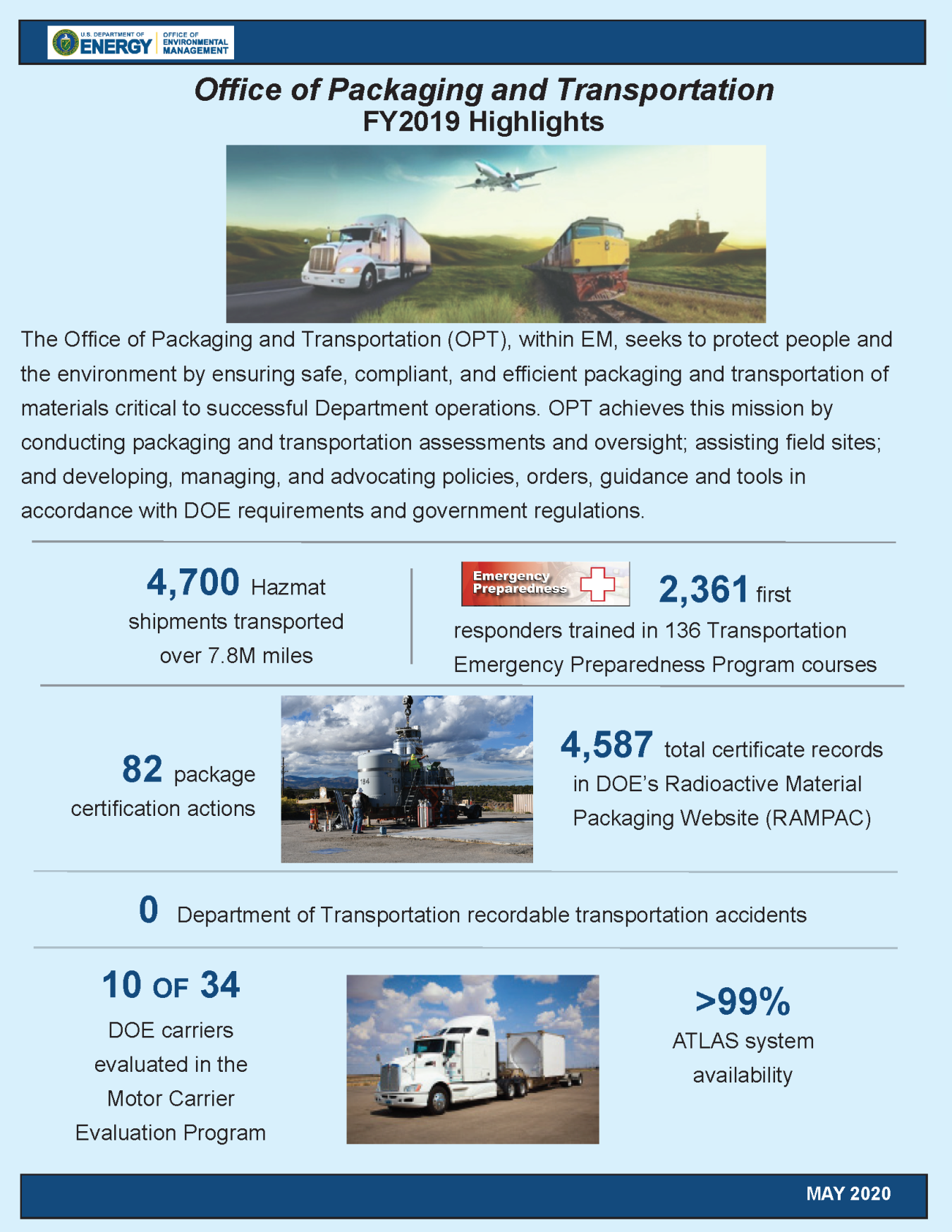
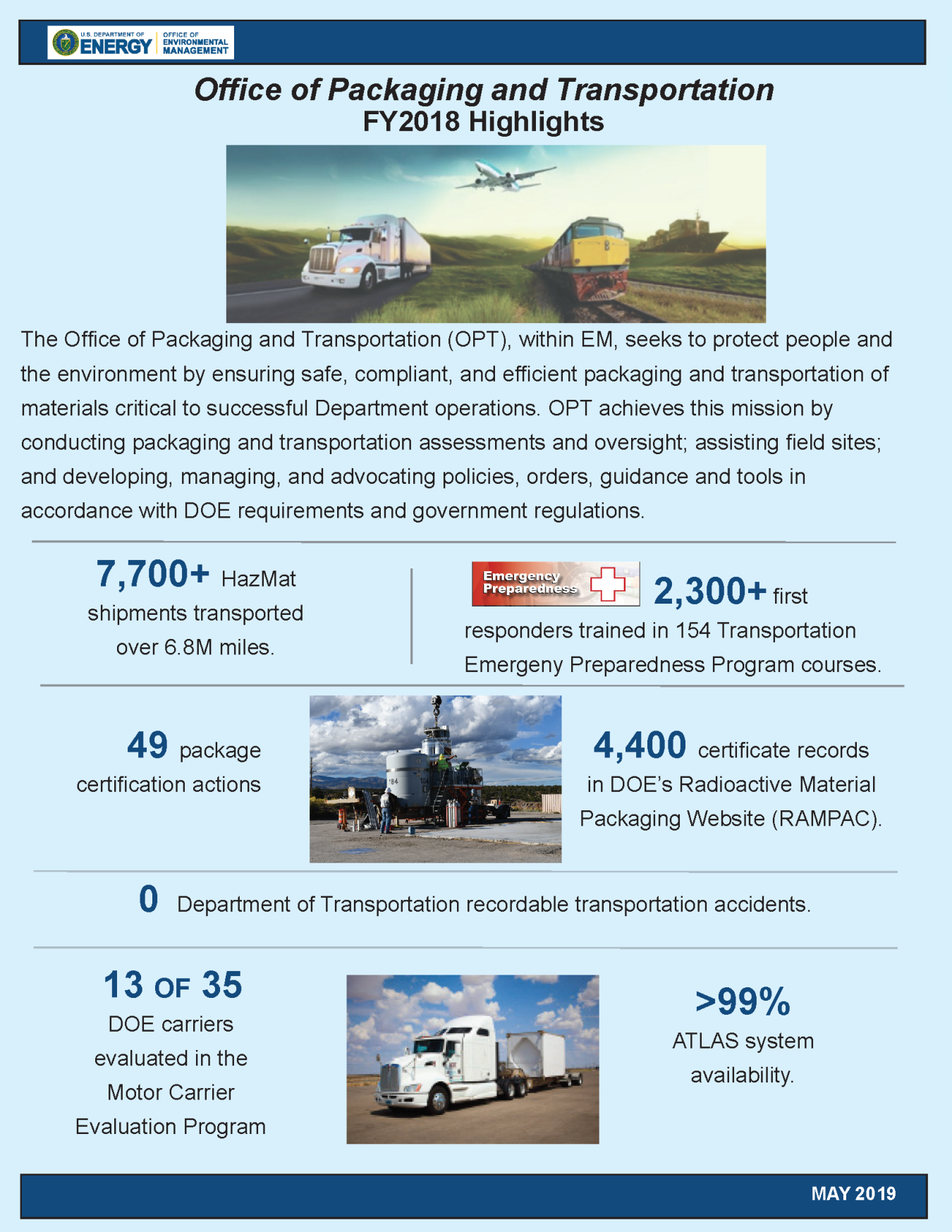
Radiological shipments are accomplished safely. Annually, about 400 million hazardous materials shipments occur in the United States by rail, air, sea, and land. Of these shipments, about three million are radiological shipments. The DOE Office of Environmental Management has successfully transported over 81,000 hazardous waste shipments in the past five years (2004 – 2008).

Programs Supporting Safe Transportation of Radiological Shipments

  • Transportation Emergency Preparedness Program

    TEPP provides the tools for planning, training and exercises, and technical assistance to assist State and Tribal authorities in preparing for response to a transportation incident involving DOE shipments of radioactive material.
  • Packaging Certification Program (Fissile and Type B Packagings)

    The Atomic Energy Act of 1954, as amended, gives DOE broad authorities to regulate all aspects of activities involving radioactive materials that are undertaken by DOE or on its behalf, including transportation. The DOE manages a program for certification of fissile and Type B packagings which conform with U.S. Department of Transportation and U.S. Nuclear Regulatory Commission requirements. For additional information about the DOE Packaging Certification Program, visit the Radioactive Material Packaging (RAMPAC) Exit EM website. The program includes the following:
    • providing guidance for preparing Safety Analysis Reports for Packaging,
    • reviewing and approving packaging designs,
    • issuing DOE Certificates of Compliance
    • reviewing and recertifying Certificates of Compliance
    • curtailing and suspending the use of specific packages, when warranted; and
    • reviewing and approving quality assurance programs for Type B and fissile materials radioactive materials packagings.
    The Packaging Certification Program conducts routine training Exit EM for radioactive packaging activities related to Safety Analysis Report for Packagings preparation, and packaging quality assurance, maintenance and operations.
  • Packaging and Transportation Operations

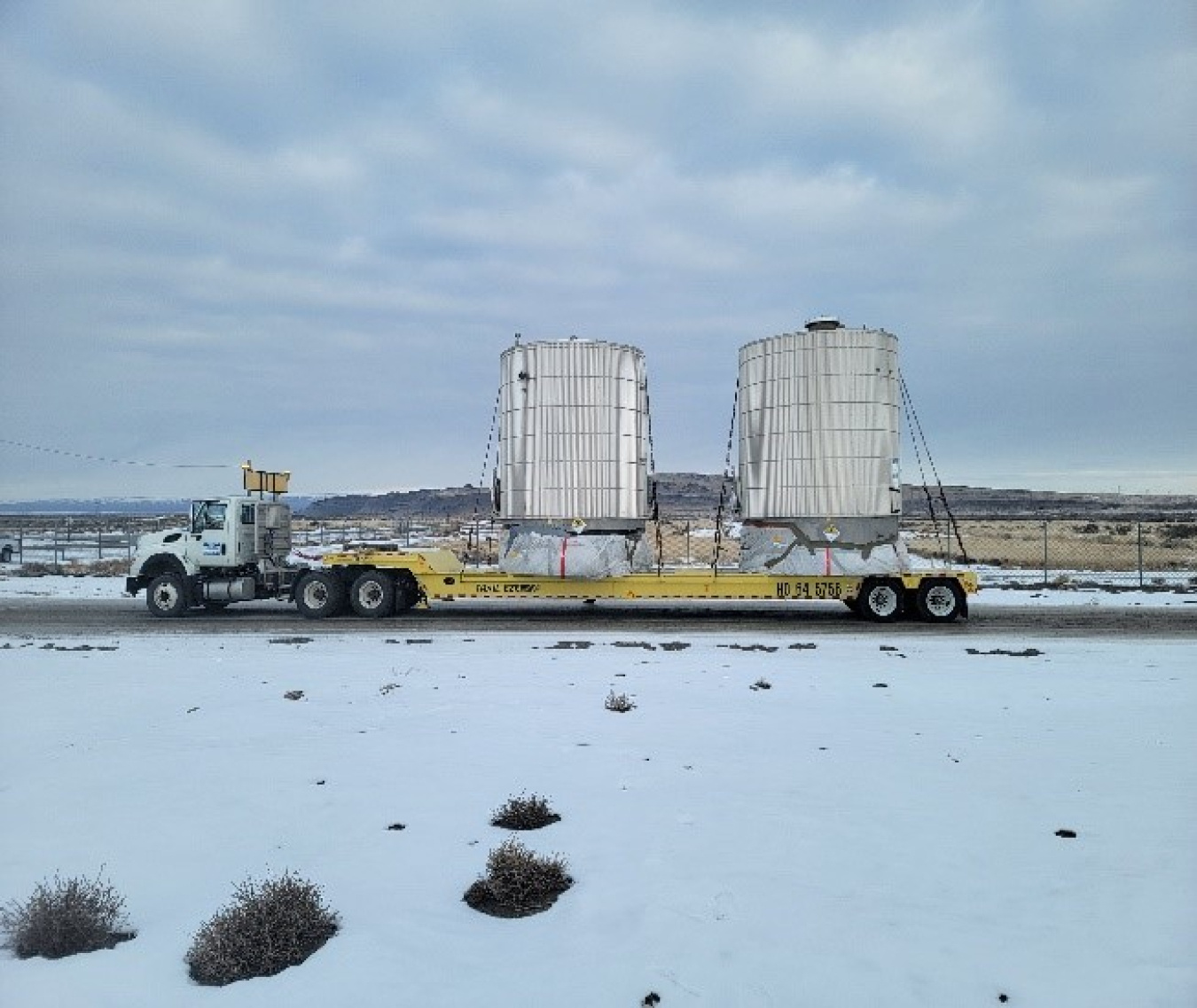
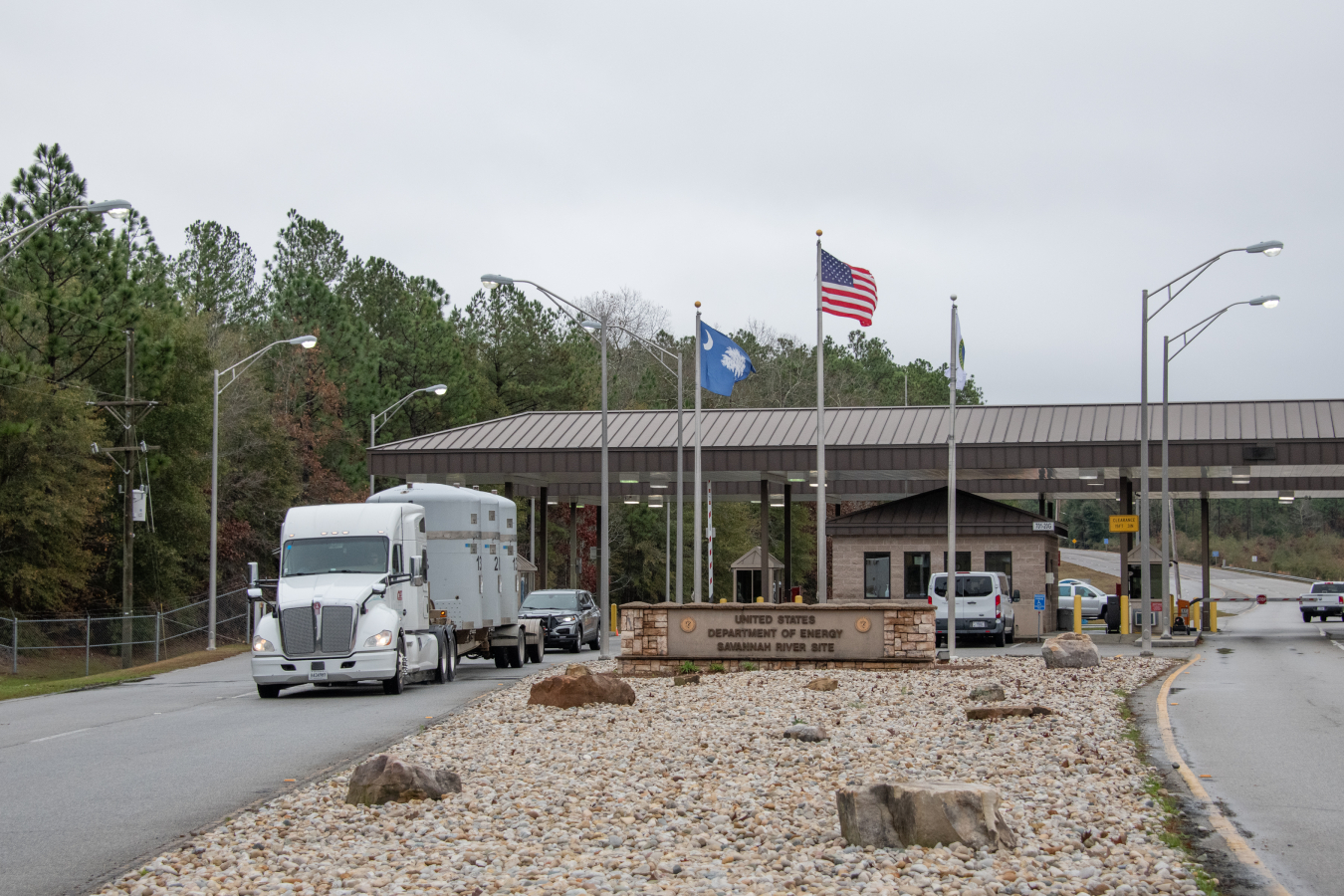
    DOE successfully completes thousands of shipments each year. The shipments have included a variety of waste types (e.g., transuranic waste Transuranic (TRU) Waste: Defined by the WIPP Land Withdrawal Act as 'waste containing more than 100 nanocuries of alpha-emitting transuranic isotopes per gram of waste with half-lives greater than 20 years, except for (A) high-level radioactive waste, (B) waste that the Secretary of Energy has determined, with concurrence of the Administrator of the Environmental Protection Agency, does not need the degree of isolation required by the disposal regulations, or (C) waste that the Nuclear Regulatory Commission has approved for disposal on a case-by-case basis in accordance with part 61 of title 10 Code of Federal Regulations'., low-level waste Low-Level Waste (LLW): All radioactive waste not classified as high-level waste, transuranic waste, spent nuclear fuel, or by-product tailings containing uranium or thorium from processed ore (as defined in Section 11(e)2 of the Atomic Energy Act of 1954 [42 U.S.C. 2011 et seq.]), and not classified as hazardous waste under the Resource Conservation and Recovery Act (RCRA). Test specimens of fissionable material irradiated for research and development only, and not for the production of power or plutonium, may be classified as LLW provided that the concentration of transuranics is less than 100 nanocuries per gram. Since the World War II Manhattan Project, DOE and its predecessor agencies have generated LLW from a variety of activities, including weapons production, nuclear reactor operations, environmental restoration activities, and research., mixed low-level waste Mixed Low-Level Waste (MLLW): Waste managed according to requirements established under Resource Conservation and Recovery Act (RCRA) for hazardous waste and the Atomic Energy Act of 1954 for its radioactive components. The hazardous component of MLLW is subject either to Environmental Protection Agency regulations promulgated under RCRA or State hazardous waste regulations promulgated under RCRA. DOE has generated MLLW as a result of research, development, production of nuclear weapons, and environmental restoration activities., spent nuclear fuel Spent Nuclear Fuel (SNF): Fuel that has been withdrawn from a nuclear reactor following irradiation, the constituent elements of which have not been separated by reprocessing. SNF may include: (1) intact, non-defective fuel assemblies or fuel rods; (2) failed fuel assemblies or fuel rods; (3) segments of fuel rods or pieces of fuel derived from spent fuel rods; and (4) various nonfuel components and structural parts of irradiated fuel assemblies. ) primarily by highway and rail. Under DOE, the National Nuclear Security Administration (NNSA) Exit EM safely and securely transports nuclear weapons, weapons components, and special nuclear material to meet projected NNSA, Department of Defense, and other customer requirements.
    • Fact Sheets
    • TRANSCOM Exit EM an unclassified tracking and communication system which can monitor the progress of various "high visibility" shipments. Since September 2001, TRANSCOM has been used to monitor over 12,000 DOE high visibility shipments.
    • DOE UN Packaging: Types of packaging approved by the United Nations and DOE for use in transporting hazardous materials and hazardous substances.
    • RADCALC Exit EM - Permits registered users to access transportation and packaging software applications.
    • RADTRAN Exit EM Website: Computer code used to conduct transportation risk assessment for radioactive material.
    • TRAGIS Exit EM Website Transportation Routing Analysis Geographic Information System.
FEATURED ITEMS
Small Box Arrow Transportation Outreach Newsletter Adobe PDF Document

Last Reviewed/Updated 11/5/2009
The White House FirstGov.gov Link: Privacy Program E-gov IQ FOIA
U.S. Department of Energy | 1000 Independence Ave., SW | Washington, DC 20585
1-800-dial-DOE | f/202-586-4403

Web Policies | No Fear Act | Site Map | Privacy | Phone Book | Employment